Kartavya Shila Mahila Evam Bal Vikas Sansthan

About the Sansthan

Who we are

A women- and child-welfare organisation, registered in Lucknow in 2000, working where skill, schooling, health, and culture meet community life.

Our story

Registered in 2000, still at the village gate

Kartavya Shila Mahila Evam Bal Vikas Sansthan — कर्तव्य शिला महिला एवं बाल विकास संस्थान — was registered under the Societies Registration Act, 1860, on 31 August 2000 (registration number 771/2000-2001). The registered office is at Nai Colony, Para Road, Rajajipuram, Lucknow.

The name is a statement of method. Kartavya is duty; shila is a foundation stone. The Sansthan was formed as a nonprofit dedicated to women and child welfare, and has spent more than two decades designing programmes that a household can actually use: a stitch, a skill, a school, a health booth, a folk evening on the maidan.

Programme records show work with departments and institutions including the Ministry of Culture, the Ministry of Minority Affairs, Uttar Pradesh Mahila Kalyan Nigam, the National Child Labour Project, NSDC, SEBI, the Ministry of Earth Sciences, the Ministry of Road Transport and Highways, and district hospitals and schools. Those names appear because they are in the activity files — not as a claimed patronage list.
Our purpose

Why the organisation exists

Too many women in rural and semi-urban Uttar Pradesh have talent without a market, and too many children have labour without a childhood. The Sansthan exists to close that distance — through vocational training, educational access, public-health campaigns, cultural programmes that keep heritage alive, and awareness that helps families claim their due from public schemes.

President

Shri Ram Kishor Chaurasia

President of Kartavya Shila Mahila Evam Bal Vikas Sansthan. He represents the organisation at programme inaugurations, cultural festivals, training batches, and public campaigns, and is named throughout the Sansthan’s activity record as the institutional head.

Secretary

Shri Mahendra Kumar Maurya

Secretary of the organisation. He appears with the President in the record of cultural programmes, artist felicitation, and community events, including festivals organised with the Ministry of Culture.

Legal character

Charitable society

12A / 12AB registration, 80G approval, PAN AAAAK4095J, NGO Darpan UP/2010/0024398. Documents are published on this website.

View documents

Approach

How we work

Go to the community

Programmes are held in villages, schools, mohallas, and public grounds — Sitapur, Barabanki, Hardoi, Unnao, Shahjahanpur, Sultanpur, Lucknow, and other districts as the work requires.

Train for livelihood

Courses are practical: tailoring, embroidery, food processing, beauty work, retail, leadership. Where a scheme provides it, a certificate, tool kit, or modest stipend follows.

Teach through culture

Folk song, dance, theatre, and school performances carry social messages — against addiction, for cleanliness, for the girl child’s education — in a language people remember.

Partner without pretence

We implement programmes with the ministries, corporations, hospitals, and schools named in each activity record. We do not invent affiliations beyond those files.

Values

What we will not trade away

Empowerment

We treat skills, knowledge, and confidence as the foundation of independence, especially for women, adolescent girls, and children from disadvantaged homes.

Inclusion

Programmes are designed for rural and urban communities, minority groups, child labourers, artisans, and families who are too often left outside formal opportunity.

Education

From special schools for child labourers to vocational classrooms and awareness seminars, learning remains the organisation’s most consistent instrument of change.

Equality

Our work affirms equal dignity — of women and men, of every community, and of every child who deserves a childhood free from labour and neglect.

Community Development

We work where people live: villages, schools, mohallas, and public grounds — building local participation rather than distant, one-time interventions.

Cultural Preservation

Folk music, dance, theatre, and traditional handicrafts are not ornaments. They are living heritage and a source of identity, livelihood, and social unity.

Social Responsibility

Health campaigns, road safety, tobacco control, and child-labour awareness treat public well-being as a shared civic duty.

Sustainable Development

Tree plantation, water conservation, plastic-free living, and home-based livelihoods are pursued so that progress does not come at the cost of the earth or of future generations.

Areas of work

The fields we return to

Women Empowerment

Vocational training, leadership development, and educational awareness so that women and girls can earn, decide, and participate.

Education

Special schools, vocational classrooms, and awareness programmes that treat learning as a right of every child and every woman.

Skill Development

Chikankari, tailoring, food processing, beauty work, retail marketing, and artisan registration — skills meant to be used.

Child Welfare

Special schools, nutrition, sports, Pulse Polio booths, and public rallies against the employment of children.

Healthcare & Awareness

Pulse Polio, leprosy survey and referral, and tobacco-control programmes in schools and colleges.

Arts, Culture & Heritage

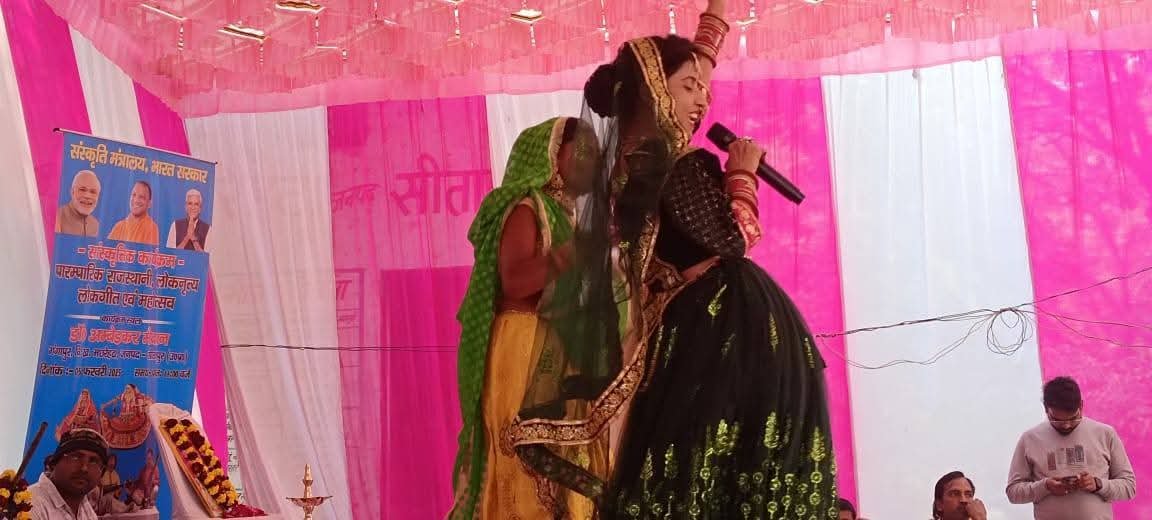
Rajasthani folk festivals, theatre, Kathak, Independence Day programmes, and online training in music, dance, art, and Taekwondo.

Environment & Sustainability

Earth Day plantation, water conservation, plastic-free campaigns, rallies, and environmental education with partner organisations.

Social Welfare

Minority welfare seminars, humanism workshops, road safety, tobacco control, and community gatherings on rights and schemes.

Community Development

Village grounds, school courtyards, mohalla booths, and block-level campaigns rather than distant, one-time events.

Financial Awareness

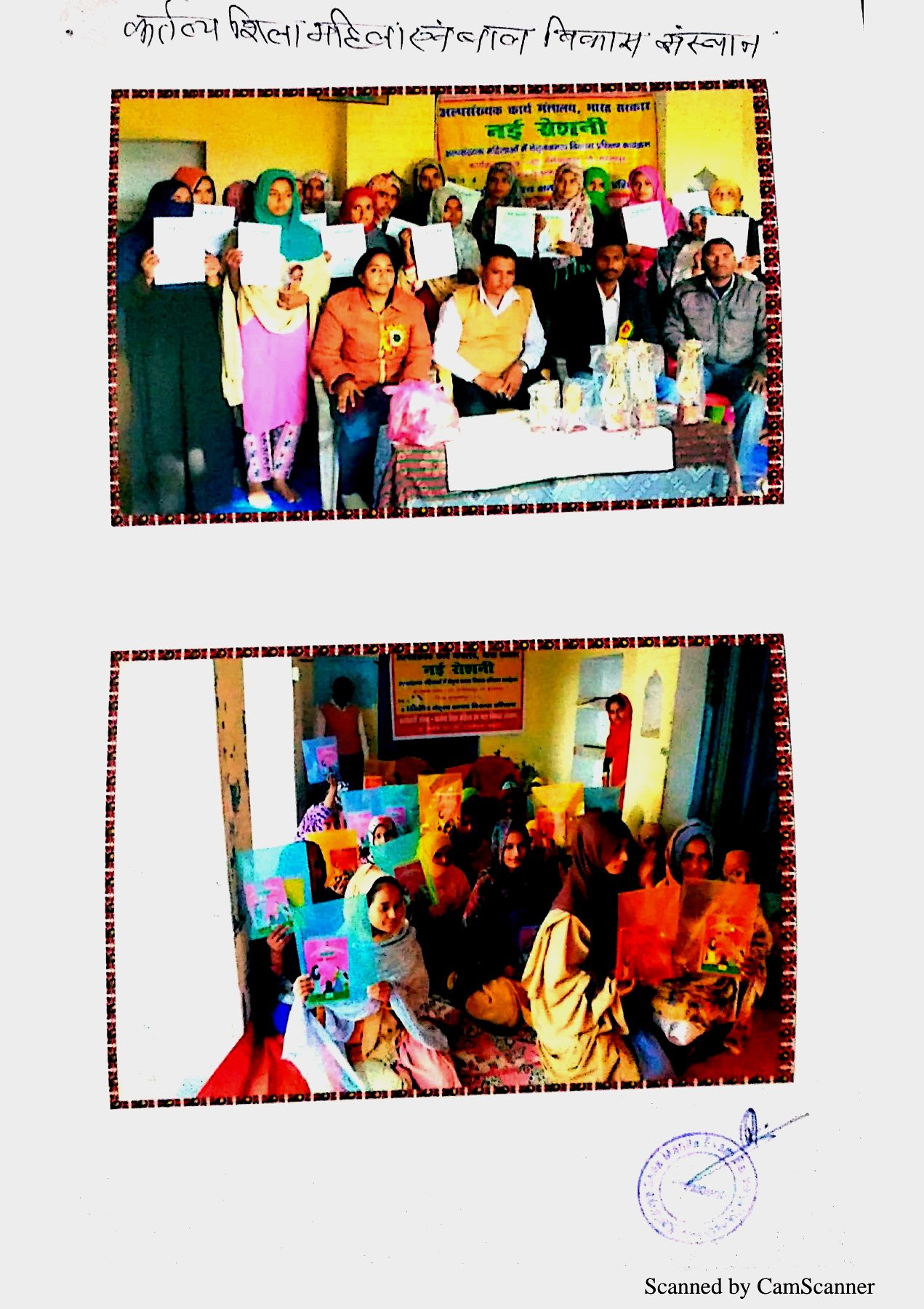
SEBI-supported financial education and investment awareness, and financial modules within Nai Roshni leadership training.

Employment-Oriented Training

NSDC retail marketing, Mahila Kalyan Nigam trades, and home-based crafts designed for self-employment.

Geography

Districts named in programme and organisational records include Lucknow, Sitapur, Barabanki, Hardoi, Unnao, Shahjahanpur, Sultanpur, Lakhimpur Kheri, Firozabad, Aligarh, Bijnor, Kanpur and other project locations as required. Presence in a district reflects implemented work, not a claim of permanent offices in every block.

Cultural programme

Get involved

Walk with the work

Whether you wish to volunteer, support a programme, or simply write to us — the Sansthan welcomes those who share its duty to women, children, and community.